
English Conversation at a Farmers Market
A first visit to a farmers market can feel easier…
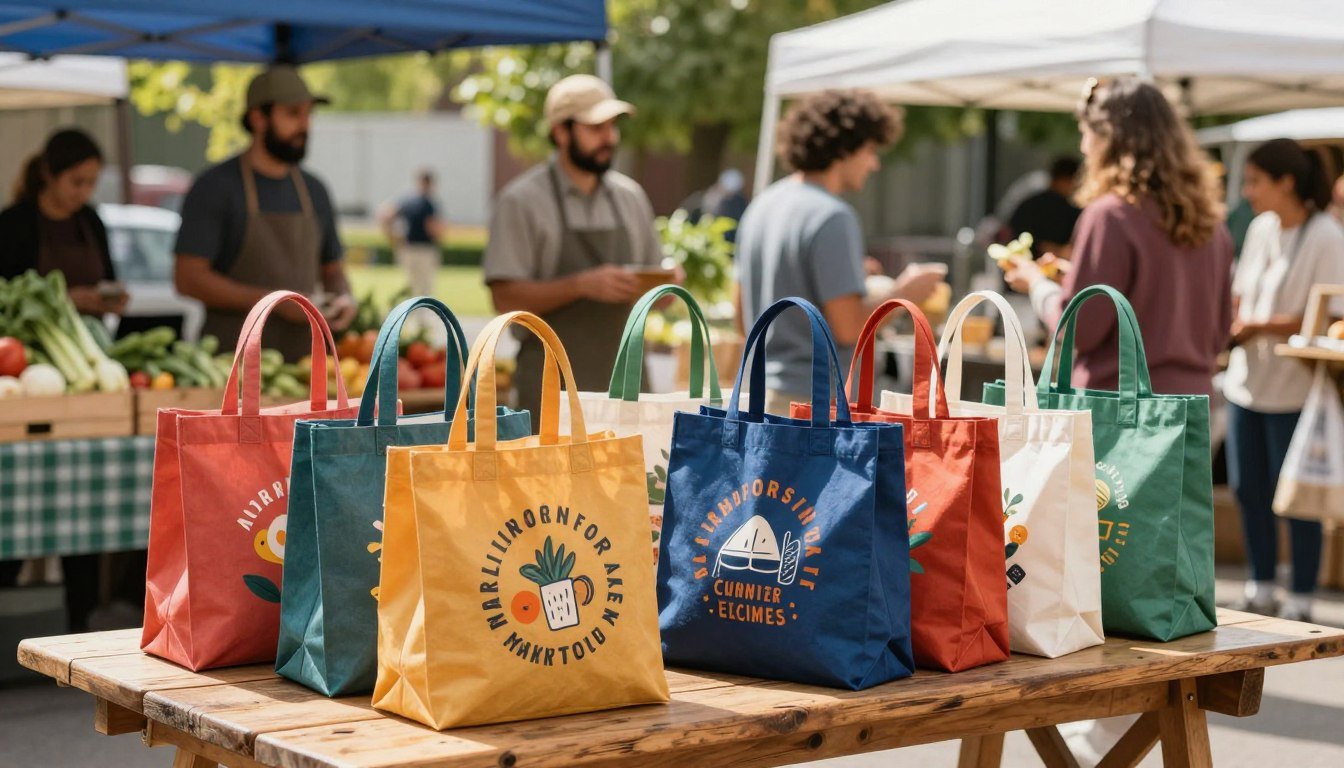
A first visit to a farmers market can feel easier once you know that one simple greeting is enough to begin. Short, polite questions work well, even if you are still learning English. Vendors may be busy serving other customers, so a friendly hello followed by a pause gives them room to finish. You can wait or come back if the timing is not right.
A small shopping list helps you remember what you need, and reusable shopping bags make it easier to carry your purchases. Market setups differ, so bring a bag but be ready to use one provided by the vendor if that is the available option. You do not need a memorized script to have a clear, useful exchange. A unit price is the price for a standard amount, such as a pound or pint, that helps you compare offers sold in different sizes.
Key Takeaways
- Start with a simple greeting and give the vendor time to respond.
- Keep a short shopping list handy.
- Bring reusable bags, while allowing for different market setups.
- Ask one clear question at a time.
- It is fine to wait or return when a vendor is busy.
Once you feel comfortable opening a conversation, the first practical exchange can be about choosing fruit and asking whether it is ripe enough to eat.
English Conversation at a Farmers Market: Buying Fresh Fruits
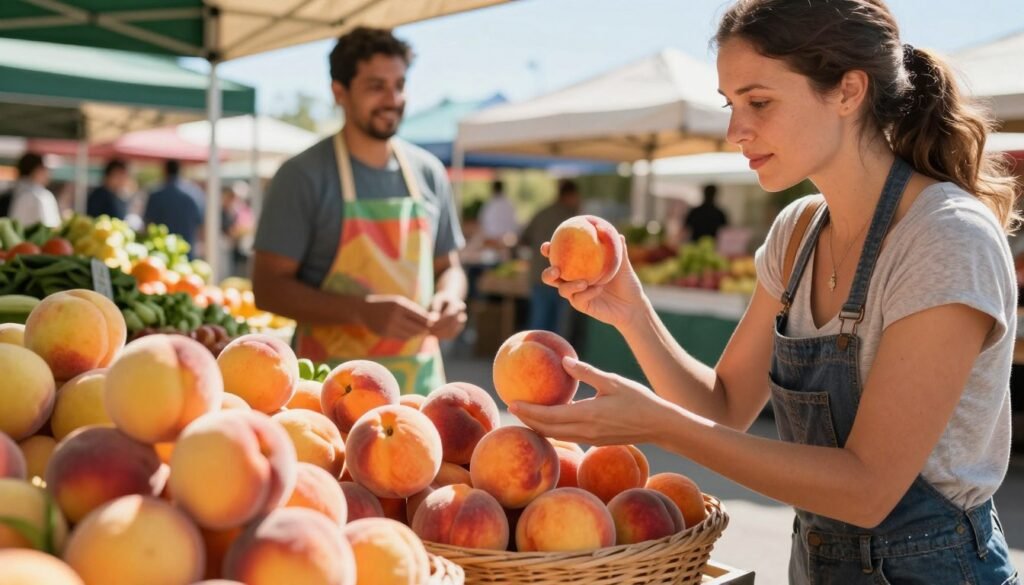
A shopper can check whether fruit is ready by asking the vendor what to look for and when to eat it. Ripeness clues vary by fruit, and a shopper should ask before squeezing delicate produce. A gentle question can also reveal how to store a purchase if you plan to eat it later. Use produce vocabulary that describes what you want, such as soft, firm, or ready today, rather than relying on appearance alone.
Ripeness clues vary by fruit, so ask the vendor what to look for. Ask before squeezing delicate produce.
Customer and Farmer Dialogue
Customer: Good morning. I’m choosing fruit for today and tomorrow. Are these peaches ready to eat today, or should I leave them on the counter?
Vendor: The softer ones are ready today. The firmer peaches should be ready in a day or two. Please don’t squeeze them; they bruise easily.
Customer: I’ll take a few firm ones, then. How should I store them when I get home?
Vendor: Leave them at room temperature until they soften. Once they’re ready, you can refrigerate them to slow them down.
Customer: Thanks. And how can I tell if these strawberries are ripe?
Vendor: Look for an even red color and fresh-looking green tops. The blueberries are ready to eat when they’re plump and have their usual color. For apples, ask which varieties are crisp or softer; color can differ by variety.
Customer: That helps. I’ll take the peaches and a small box of strawberries.
| Fruit | A practical ripeness clue | Sample question |
|---|---|---|
| Strawberries | Even red color | Are these ready to eat today? |
| Peaches | Firm or slightly soft, depending on when you want to eat them | Will these be ready tomorrow? |
| Apples | Texture varies by variety | Which apples are crisp? |
| Blueberries | Plump berries with their usual color | How should I store these? |
After selecting fruit, you can use the same friendly approach to ask which vegetables will work for a meal.
English Conversation at a Farmers Market: Buying Fresh Vegetables
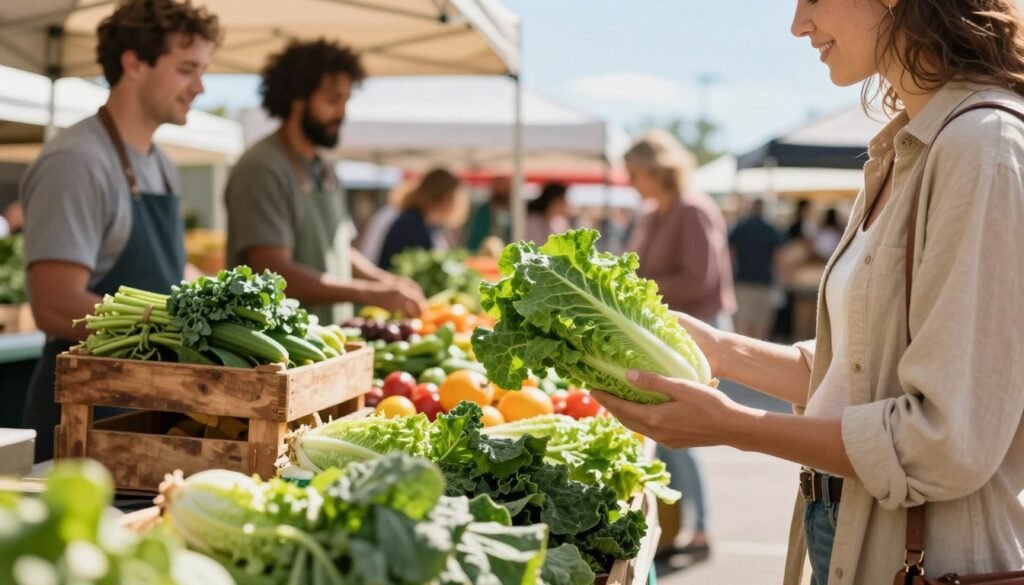
A shopper making dinner can ask which vegetables are crisp enough for a salad or tender enough to cook quickly. Describe the texture you want, and ask the vendor what suits your dish. Words such as crisp, tender, firm, and leafy help you explain your preference. They describe produce quality, but appearance alone does not prove how a vegetable will taste or whether it has been handled safely.
Customer and Farmer Dialogue
Customer: Hi. I’m making a salad tonight and would like greens that stay crisp. Which of these would you choose?
Vendor: The romaine is firm and crisp. The leaf lettuce is softer and more tender, so it may work better if you want a delicate salad.
Customer: I’ll take a look at the romaine. Is it leafy all the way through, or are the outer leaves the best part?
Vendor: The inside leaves are crisp too. You can remove any outer leaves that look tired when you prepare it.
Customer: I’m also cooking beans. Do you have a vegetable that would cook quickly with them?
Vendor: The young zucchini cooks quickly. Slice it thinly and add it near the end. The green beans are firmer and need a little longer.
Customer: That sounds good. I’ll take the zucchini. Do you offer food samples here, or is that not available today?
Vendor: We aren’t sampling vegetables today, but I can tell you how I usually cook them.
Customer: No problem. I’ll try the zucchini with the beans at home.
Vendor: That should work. Let me know if you want the cooking time written down.
Once you have chosen vegetables for the meal, the next useful question is how much they cost and what amount the price covers.
English Conversation at a Farmers Market: Asking About Prices
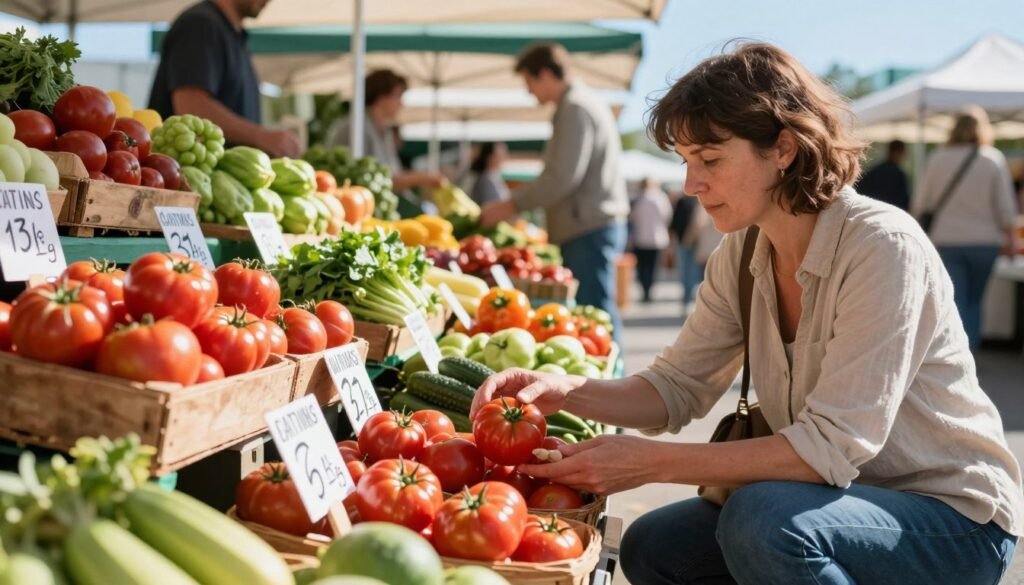
Before filling a bag, the customer should confirm both the amount due and the unit being priced. Ask what the price covers before choosing how much to buy. A unit price is the price for a standard amount, such as a pound or pint, that helps you compare offers sold in different sizes. At a market, vendors may sell similar items by weight, basket, bunch, or container, so a quick clarification prevents surprises.
Customer and Vendor Dialogue
Customer: Hello. How much are these apples?
Vendor: They’re priced by the pound. The sign shows the current price.
Customer: Is that per pound or per basket? I want to be sure I understand.
Vendor: Per pound. The small baskets are just for carrying them while you shop.
Customer: Got it. What about the berries? Is that price for the whole container?
Vendor: Yes, the berries are sold by the container. The container size is printed on the sign.
Customer: And are these herbs sold by the bunch?
Vendor: They are. The tomatoes are sold by weight, so I’ll weigh the amount you choose and tell you the total.
Customer: Thank you. I’ll decide on the tomatoes after I check the amount. I appreciate you clarifying each unit.
Vendor: Of course. Let me know if you want me to weigh a portion before you decide.
| Item | Common selling unit to confirm | Clarifying question |
|---|---|---|
| Apples | Pound or basket | Are these priced per pound or per basket? |
| Berries | Container | Is the price for this whole container? |
| Herbs | Bunch | Is this price for one bunch? |
| Tomatoes | Pound or container | Are these sold by weight or by container? |
With the cost and unit clear, you can ask what a vendor means by an organic description without assuming that local means organic.
English Conversation at a Farmers Market: Asking About Organic Products
A shopper can ask directly what an organic description means rather than guessing from a sign. Ask about the specific claim, including whether a product is certified organic and what information its label gives. Local, organic, and pesticide-free are not interchangeable claims. A label can provide product details, but a label alone does not prove that a food is safe for every person or answer every question about how it was grown.
Customer and Farmer Dialogue
Customer: Hi. Your sign says these carrots are organic. Are they certified organic?
Vendor: Yes, these carrots are certified. The label on the package has the certification details. The loose carrots have a sign with the same product information.
Customer: Could I see the package label? I want to understand what it says.
Vendor: Certainly. It names the product and gives the certification information. It doesn’t list ingredients because these are whole carrots.
Customer: Thanks. I saw another sign saying pesticide-free. Is that the same as certified organic?
Vendor: No. Those words describe different claims. You’d need to ask the grower what they mean by pesticide-free; it doesn’t automatically mean certified organic.
Customer: Understood. I’ll choose these carrots based on the information you’ve shared, not make assumptions from the sign.
Vendor: That’s a good approach. I can show you the details for another packaged item if you’d like.
Four useful questions can help you clarify a claim:
- “Is this certified organic?”
- “What does this label mean?”
- “Are any ingredients listed?”
- “Can I see the package label?”
Once you understand how the product is described, you can ask when the food was picked or made.
English Conversation at a Farmers Market: Asking About Freshness
A shopper who wants to know how recently produce was picked can ask the vendor directly. A specific time question is often more useful than asking whether something is fresh. You might also make a sampling request, but ask before touching or tasting anything. Sampling etiquette matters because the vendor may need to prepare a sample or may not offer one for that product or at that stall.
Customer and Vendor Dialogue
Customer: Good morning. When were these greens picked?
Vendor: They were picked yesterday morning. I can check the harvest note for the exact details if you need them.
Customer: Yesterday is helpful, thank you. Do you offer a sample of the sliced melon?
Vendor: I can offer a sample of the melon. Please wait while I prepare it for you.
Customer: Of course. I won’t touch the display. Is there a sample of the herb leaves too?
Vendor: We aren’t sampling the herbs today, but you can smell the bunch if you’d like. Please ask me before handling anything.
Customer: Thanks for letting me know. Is the melon already cut, or will you cut a fresh piece?
Vendor: I’ll cut a small piece now using the preparation area behind the table.
Customer: I appreciate that. I’ll try the sample and then decide whether it suits my lunch.
Vendor: Take your time. Sampling may not be available for every product, and another stall may have different options.
Packaged or refrigerated goods call for a different set of questions, especially about storage and product details.
English Conversation at a Farmers Market: Buying Eggs and Dairy Products
For eggs or dairy, a shopper can ask about the package and storage before deciding what to buy. Check the details that matter to you, such as the package information, refrigeration instructions, and ingredients in a cheese. Questions about local sourcing are reasonable, but a vendor may sell products made by another farm. If you have food allergy questions, ask directly and do not treat a general answer as a guarantee.
Customer and Farmer Dialogue
Customer: Hello. I’m looking at the eggs and cheese. Could I check the information on the egg carton?
Vendor: Sure. The carton has the producer and handling details. These eggs need to be kept refrigerated after you take them home.
Customer: Are they from your farm, or do you sell eggs from another producer?
Vendor: These are from another local farm. I can show you the name on the carton.
Customer: Thanks. I also have an allergy concern about some ingredients. Does this cheese contain anything besides milk, salt, and cultures?
Vendor: I can show you the package label. Please read it carefully, and contact the maker if you need details that aren’t listed here.
Customer: I will. How should I store it after opening?
Vendor: Keep it refrigerated and follow the storage instructions on the package.
Customer: That helps me decide what to check before choosing. I’ll read the label before I buy.
| Product | Detail to check | Sample question |
|---|---|---|
| Eggs | Carton information and storage | What does the carton say about storage? |
| Milk | Ingredients and refrigeration | Which ingredients are listed on the container? |
| Cheese | Package label and handling | Can I read the label and storage instructions? |
For homemade goods, asking about ingredients and how the product is handled is just as useful.
English Conversation at a Farmers Market: Buying Homemade Products
A customer with a dietary restriction can start by asking what ingredients are in a homemade product. Be direct about what you need to avoid, and ask whether a sample is available without assuming the vendor offers one. A checklist can keep the conversation clear, especially when a label is not provided. If you have a serious allergy, ask plainly and avoid relying on assumptions about shared preparation areas or tools.
Customer and Farmer Dialogue
Customer: Hi. I’m interested in this loaf. Could you tell me what ingredients are in it?
Vendor: It’s made with flour, butter, eggs, sugar, and apples. I have a written ingredient list here.
Customer: I avoid nuts. Are any nuts listed, and is the loaf made in a shared area?
Vendor: Nuts aren’t listed in this recipe, but the kitchen also handles nuts. I can’t guarantee there was no cross-contact.
Customer: I have a serious allergy, so I won’t make assumptions from the recipe. Is a sample available?
Vendor: I’m not offering samples of the loaf today. I can show you the full ingredient list, but you should use your own judgment about whether it suits your needs.
Customer: I appreciate the clear answer. How should the loaf be stored?
Vendor: Keep it covered at room temperature and follow the storage note on the package.
Customer: I’ll read that note and decide. Thank you for explaining the preparation area, too.
Vendor: You’re welcome. Feel free to ask if you need me to clarify anything on the list.
- What ingredients are in this product?
- Does it meet my dietary restrictions?
- Could it contain an allergen through shared preparation?
- How should I store it after I buy it?
After checking whether a product suits your needs, you can ask the vendor what to try next.
English Conversation at a Farmers Market: Asking for Recommendations
A shopper unsure what to choose can describe the meal they have in mind and ask for one suggestion. Give the vendor a useful detail, such as what you plan to cook or a flavor you enjoy. That makes vendor recommendations easier to tailor than a broad request for “something good.” Greeting local vendors warmly also gives the exchange a natural start. A follow-up question can help you use the suggested item once you get home.
Customer and Farmer Dialogue
Customer: Good morning. I’m making pasta tonight and want a vegetable to roast alongside it. What do you recommend?
Vendor: The small squash would roast nicely. It becomes tender, and you can season it with olive oil and herbs.
Customer: That sounds good. How would you prepare it?
Vendor: Cut it into pieces of similar size, spread them on a pan, and roast until tender. You can add herbs near the end so they don’t burn.
Customer: Would you serve it with the pasta or mix it into the sauce?
Vendor: Either works. If you want a simple meal, serve it on the side. If you want it in the sauce, cut the pieces smaller.
Customer: I’ll try it on the side. Is there another vegetable you’d suggest if I want a stronger flavor?
Vendor: The onions have a sharper flavor and would work in the sauce. They take longer to soften than the squash.
Customer: That gives me a plan. I’ll choose between those depending on what I cook.
Vendor: Sounds good. Let me know if you want help picking one out.
After choosing a suggested item, a separate, courteous question can clarify whether its price is flexible.
English Conversation at a Farmers Market: Bargaining for a Better Price
If a shopper wants to ask about a discount, a respectful question gives the vendor room to say no. Ask once without pressure, and accept the answer graciously. Bargaining is not expected at every market or with every vendor, and it is not a customer’s right. A vendor may have set prices or thin margins, so a polite bargaining approach should leave the decision entirely with the person selling the goods.
Customer and Farmer Dialogue
Customer: Hello. I’m interested in buying several of these jars. Would you consider a lower price if I buy more?
Vendor: Thanks for asking. I’m not able to lower the price today; it’s firm for each jar.
Customer: No problem, I understand. I wanted to ask, but I don’t want to put you in an awkward position.
Vendor: I appreciate that. The price covers the ingredients and the time it takes to make each batch.
Customer: Is this price firm for all the items, or do you ever offer a deal on a particular product?
Vendor: It’s firm today. Some vendors have different policies, but I keep the same price for everyone.
Customer: Understood. I’ll decide whether one jar works for me at that price.
Vendor: That’s completely fine. There’s no pressure to buy.
Customer: Thank you for answering. I’m happy to take one jar.
Vendor: You’re welcome. I’ll set it aside while you finish shopping.
- “Would you consider a lower price if I buy more?”
- “Is this price firm?”
- “No problem, I understand.”
What is available can also depend on the time of year, so you can ask what ingredients are in season before you plan your next meal.
English Conversation at a Farmers Market: Asking About Seasonal Produce
A shopper can find out what is in season by asking the vendor what is especially good right now. Availability varies by location and growing conditions, so berries, tomatoes, squash, and apples do not follow one fixed calendar everywhere. Ask what may be available later, too, if you are planning future meals. Discussing seasonal ingredients can lead to a practical suggestion for using an unfamiliar item.
Customer and Farmer Dialogue
Customer: Good morning. What’s especially good right now?
Vendor: The tomatoes are a popular choice today. We also have squash that works well in soups or roasted dishes.
Customer: What might be available later in the season?
Vendor: It depends on how the weather and growing conditions go here. We may have apples later, but I can’t promise a particular variety or date.
Customer: That makes sense. I’m planning a simple dinner. How would you use the squash?
Vendor: You could roast it with onions, or cook it in a soup. If you want a quick side, cut it into small pieces so it cooks more evenly.
Customer: Would tomatoes work with that meal, or would you keep them for another dish?
Vendor: They’d be good in a fresh salad alongside it. The best choice depends on what flavors you like.
Customer: I’ll take a look at the squash, then. I like having a few ideas for seasonal ingredients.
Vendor: Glad to help. Tell me what you’re cooking if you want to talk through another option.
Once you choose a seasonal item, you can ask for an amount that fits your recipe and household.
English Conversation at a Farmers Market: Choosing the Right Quantity
A shopper planning a recipe can ask for an amount using a familiar unit or an everyday quantity expression. Say the amount you need, then ask the vendor to clarify if the product is sold differently. Common U.S. market measures include pounds, pints, quarts, and dozens, while “a bunch” and “a few” are useful everyday expressions. Pounds and ounces measure weight; cups, pints, and quarts measure volume, so they are not interchangeable conversions.
Customer and Vendor Dialogue
Customer: I’m making a pie. Could I get a pound of apples?
Vendor: Sure. I’ll weigh a pound for you. Are you looking for a particular variety?
Customer: A crisp variety, please. I only need half a pound of berries, too. Are those sold by weight?
Vendor: The berries are sold by the pint. You can choose a pint, or I can check whether we can sell a smaller amount.
Customer: I’ll take a pint. Could I also get a quart of tomatoes for soup?
Vendor: Tomatoes are sold by weight here, not by volume. I can help you choose an amount that looks right for your recipe.
Customer: Thanks. I also need a dozen eggs and a bunch of parsley.
Vendor: I can get both. Do you want just a few sprigs of parsley, or the whole bunch?
Customer: The whole bunch is fine. That gives me enough for the soup and another meal.
Vendor: Great. I’ll gather everything and let you know the total when I’m done weighing it.
| Market measure | Equivalent | Sample request |
|---|---|---|
| 1 pound | 16 ounces | Could I get a pound of apples? |
| 1 pint | 2 cups | Could I get a pint of berries? |
| 1 quart | 4 cups | Could I get a quart of tomatoes? |
| 1 dozen | 12 | I’d like a dozen eggs. |
Once you and the vendor have settled on the amount, ask which payment methods they accept.
English Conversation at a Farmers Market: Paying for Groceries
Before paying, the customer can ask which payment methods the vendor accepts. Confirm the total after the order is weighed or added up, since payment options differ from stall to stall. Some vendors take cash only, while others may accept cards or cashless payments. Do not assume a particular option is available. You can ask clearly, then wait while the vendor finishes totaling your purchase.
Customer and Vendor Dialogue
Customer: That’s everything for me. What’s the total?
Vendor: Your total is shown on the scale display. I’ll read it out once I finish adding the eggs and parsley.
Customer: Sure, I’ll wait. Do you accept cash?
Vendor: Yes, I take cash. I also accept cards, but I don’t take every cashless payment app.
Customer: Thanks for letting me know. I can pay by card. Is it okay to tap, or should I insert it?
Vendor: Tapping works here. I’ll finish weighing these tomatoes first, then I’ll bring up the payment screen.
Customer: No problem. I’ll wait until you’re ready.
Vendor: The total is ready now. You can tap your card whenever you’re ready.
Customer: Done. Could I have a receipt, please?
Vendor: Certainly. Here you go. Thanks for stopping by.
Customer: Thank you. Have a good day.
- Ask which payment types the vendor accepts.
- Confirm the total after the vendor finishes weighing or totaling the order.
- Wait for the vendor to finish weighing or totaling before paying.
- Keep the receipt if one is offered.
With the purchase handled, a compact phrase bank can help you adapt to other market conversations.
Common Farmers Market English Phrases Used in Conversations
A small set of adaptable phrases helps a shopper keep a conversation moving when a memorized script does not fit. Choose the phrase for the moment: a greeting opens the exchange, while a clarifying question checks one detail. Farmers market vocabulary can stay simple and still sound natural. These are flexible prompts, not a complete customer-vendor dialogue, so add the specific item or detail you need.
- Greetings: “Good morning.” “How’s your day going?”
- Asking: “Could I ask you about this?” “What do you recommend?”
- Clarifying: “Is that per pound?” “Could you say that once more?”
- Closing: “That’s all, thank you.” “Have a nice day.”
For example, “What do you recommend?” gives you a starting point, but you can make it more useful by adding what you plan to cook. “Could you say that once more?” is a courteous way to keep listening when you miss a detail. A simple “Good morning” also works when a vendor is serving someone else; you can wait for a natural pause before asking your question.
Spoken American English often shortens phrases in a friendly way, as in “How’s your day going?” The question is polite without requiring a long conversation. If you need a more specific answer, name the product: “Could I ask you about this cheese?” The closing phrases signal that you are finished without making the transaction sound abrupt.
Even with these phrases ready, you may still wonder what to say when a conversation takes an unexpected turn.
Frequently Asked Questions About English Conversation at a Farmers Market
Even with a few useful phrases ready, shoppers may want to know what to say when a conversation takes an unexpected turn. A brief, direct question usually gives the vendor a clear way to respond. You can also pause, wait, or ask for clarification if the stall is busy or an answer is unfamiliar. You do not have to understand every word to keep the exchange polite and useful.
A brief, direct question usually gives the vendor a clear way to respond. If a stall is busy, you can wait or return later.
What should I say if a vendor is busy?
Say, “Whenever you have a moment, could I ask you a question?” This opener acknowledges that the vendor may be serving another customer and lets them choose when to respond. You can wait nearby without blocking the stall, or return later if the line is long. A brief smile or nod can show that you are ready to wait.
How can I ask whether food was grown locally?
Ask, “Did you grow this here?” or “Where was this grown?” A vendor may sell products grown by another person or farm, so the answer might identify a producer rather than the vendor’s own fields. If the product is packaged, the label may provide additional location details, though it may not answer every question about where it was grown.
Can I ask to taste produce before buying it?
Yes, ask first: “Do you offer samples?” Sampling may not be available for that product or at that stall, and the vendor may need to prepare a sample for you. Wait for permission rather than touching food on display. If there is no sample, you can ask the vendor to describe the product or suggest a way to use it.
How do I ask whether a product contains an ingredient I avoid?
Ask directly, “Does this contain [ingredient]?” A vendor may know the recipe, but a general assurance may not cover shared equipment or preparation areas. If you have a serious allergy, do not rely on a guess or vague answer; ask for the written label or ingredient information and avoid the item if you cannot get clear details.
What is the difference between a pound and a pint at a farmers market?
A pound measures weight, while a pint measures volume, so the amounts cannot be converted without knowing the product. A pound of berries and a pint of berries describe different kinds of measures, not a universal equivalent. Ask whether the vendor sells that item by weight or by container, then confirm what the listed unit covers.
What can I say if I do not understand the vendor’s answer?
Ask, “Could you say that more slowly?” or “Could you explain what you mean?” You can also repeat the part you did understand and ask whether you heard it correctly. Vendors may use a product name, local term, or measurement you have not learned yet. A calm request for clarification is normal and helps prevent confusion.
On your next visit, try one simple phrase and let the conversation grow from there.
Conclusion
A confident conversation can begin with a single clear question. Polite, direct wording helps you get the information you need, and it is fine to ask a vendor to repeat or clarify an answer. You do not need to speak perfectly; making your request understandable is enough to move the exchange forward.
Choose one phrase before your next visit, such as asking a vendor for a recommendation. Use it when there is a natural pause, then listen for one detail you can follow up on. Practice greeting local vendors and asking one question at a time, and give yourself credit for making the effort. Try that one phrase during your next shopping trip.