
100 Metonymy Example Sentences in English
“City Hall says the pool will reopen Friday” names a…

“City Hall says the pool will reopen Friday” names a place, but the sentence means that municipal officials made the announcement. If you have paused over a sentence like this, Metonymy Example Sentences can help you see how familiar words carry more than their literal meaning. The key is to spot a connection, not just an unusual phrase.
This collection offers original examples with clear explanations, moving through everyday conversation, literature, and public language. You’ll also see why a relationship based on association differs from one based on resemblance, a useful distinction when you’re sorting figures of speech and other rhetorical devices. Start with the core definition, then use context to interpret each example.
Key Takeaways
- Look for a word or phrase that points to a related referent.
- Use the surrounding sentence to decide what the expression means.
- Association connects related things; resemblance is the key clue for metaphor.
- Tone comes from the whole sentence, not from the metonymic expression alone.
- Check whether a part stands for a whole when distinguishing synecdoche.
What Is Metonymy?
Metonymy names something through a closely associated word or phrase. Semantic association is a recognizable connection between two related things, such as a place and the institution based there.
A word or phrase refers to something connected to it rather than naming that thing directly. In “The White House issued a statement,” the intended referent is administration officials, not the building. In “The kettle is boiling,” the referent may be the water inside it. Association, not resemblance, is the key clue in identifying this kind of symbolic language.
Look for a meaningful connection between the expression and its referent. If the connection depends on resemblance instead, you may be looking at a different figure of speech.
| Expression | Literal meaning | Intended referent | Association |
|---|---|---|---|
| The White House issued a statement | White House building | Administration officials | Place for institution |
| The kettle is boiling | Kettle | Water | Container for contents |
| The studio announced a sequel | Studio | Film company | Place for institution |
| The pen shaped public opinion | Writing tool | Writing or journalism | Tool for associated activity |
These examples show how conceptual association can connect a location, container, or tool to something related. Readers can first look for a meaningful connection, then move on to the different patterns that connection can take.

Metonymy Example Sentences
“The courthouse delayed its response” uses the building’s name for the institution operating there. The intended referent is the court or its officials, not the courthouse walls.
“The bowl disappeared before halftime” can mean the food in the bowl was eaten, using a container for its contents. “The microphone announced a final warning” uses a tool for the person speaking through it. “The newsroom celebrated a scoop” can mean its staff celebrated a piece of reporting. An expression can be metonymic even when it sounds ordinary; context reveals what it refers to.
These common metonymic expressions illustrate several common metonymy types without needing elaborate wording. Their meanings become clear because the associated referent fits the situation. Examples can also be grouped by length and tone, beginning with especially brief ones.
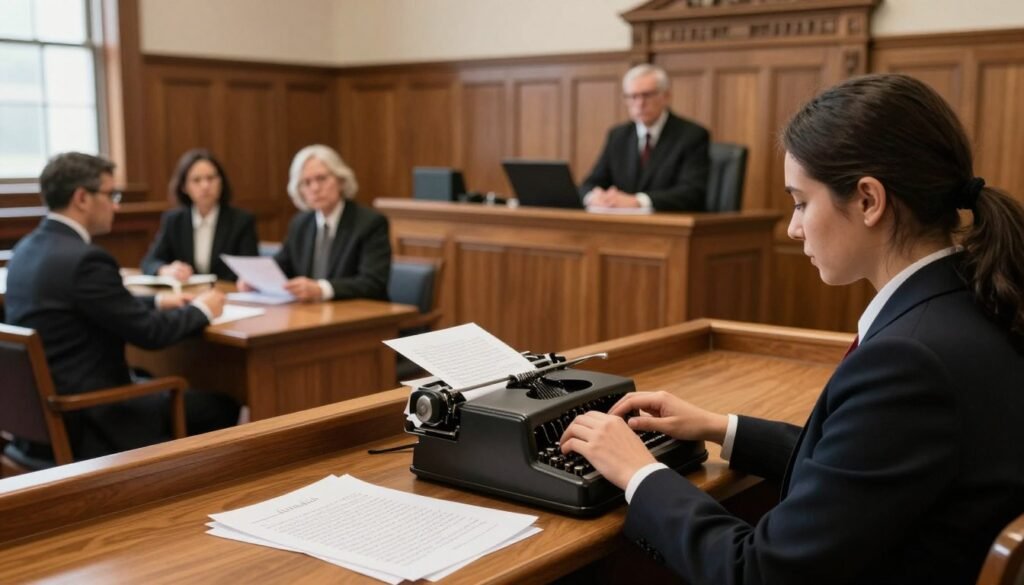
Short Metonymy Sentences
“The press arrived early” means journalists arrived, not a printing machine. The surrounding situation helps you identify that referent from a compact sentence.
Five short sentences are enough to show how symbolic associations work in everyday phrasing:
- “The crown approved the plan.” The monarchy or royal authority approved it.
- “The press arrived early.” Journalists arrived at the event.
- “The kitchen is short-staffed.” The kitchen workers are too few in number.
- “Hollywood loves a sequel.” The film industry tends to favor sequels.
- “The bench ruled unanimously.” The judges agreed on the ruling.
Context can resolve more than one possible referent: “the press” might mean journalists at a briefing, but printing equipment in a machine shop. These short examples of symbolic associations in language work because the situation supplies the missing detail. Sentence length does not determine whether an expression feels approving or critical.

Positive Metonymy Example Sentences
“The lab celebrated its breakthrough” means the research team celebrated a discovery. The people did the celebrating, even though the sentence names their workplace.
“The crown honored her courage” uses royal authority for the people or institution granting the honor. “The pen gave a voice to overlooked neighbors” uses writing for the work that helped them speak publicly. Positive tone comes from the surrounding message, not from the metonymic word alone.
These figurative language examples show how figurative language devices can convey achievement, trust, or admiration. A lab can be associated with careful work, and a pen with advocacy, but neither word guarantees praise in every sentence. The same kinds of expressions can carry a negative tone in a different context.
Negative Metonymy Sentences
“The suits rejected the proposal” means business executives rejected it, not that clothing made a decision. The suits refers to people through what they wear.
“The board ignored the workers” uses the board for its members. “The press chased the rumor” means reporters pursued the story. A nonhuman subject acting like a person may instead involve personification, but “the suits” is metonymy because clothing is associated with the people meant.
These figure of speech examples can sound critical because the sentence portrays the people or their actions unfavorably. Tone is not what makes the expression metonymic; its relationship to the referent does that work. Rhetorical figure of speech choices can be subtle, so move from statements to questions and remember that punctuation alone does not decide whether a sentence uses metonymy.
Question Metonymy Example Sentences
“Will City Hall answer the residents?” asks whether municipal officials will respond. The place name stands for the people working in local government.
Questions use the same associations as statements; the question mark does not change the relationship.
- “Has the kitchen decided on tonight’s special?” The question means the kitchen staff, not the room, will choose the dish.
- “Can the press confirm the schedule?” The intended referent is journalists who can verify it.
- “Is Wall Street worried about the announcement?” Wall Street refers to financial markets and participants.
- “Will City Hall answer the residents?” City Hall means the municipal officials expected to respond.
A named place can refer to different institutions depending on context. For example, Wall Street might refer to a specific street in a description of a walk, but to financial activity in a question about investment. Identifying figures of speech means checking that context rather than relying on a name alone. In literature, the clues may come from a broader passage, not just one sentence.
Metonymy Sentences From Literature
A reader encountering “throne” in a passage about political power may find that the word points to royal authority. Nearby details help identify the referent and keep a reader from guessing too quickly.
Here are two original illustrative sentences, not quotations from named works:
“The throne trembled as the rebellion spread.” The throne stands for royal authority, which faces a threat.
“Her pen carried the village’s grief.” The pen stands for her writing, which conveys the community’s sorrow.
Use nearby details to decide what a literary expression refers to. A scene about a ruler can support the first reading; a passage about a writer’s account can support the second. Metonymy in literature can contribute to imagery, but it is not automatically symbolism or metaphor. Readers identifying metonymy in literature should attend to how each word connects to the passage’s people and events, just as they would when studying symbolism in literature or literary devices in poetry. Public reporting also often names institutions and places as shorthand.
Metonymy Sentences From News
A headline may name an institution’s location while referring to officials who work there. In a constructed example, “The White House issued a statement” means administration officials issued it, not that the physical building spoke.
All news-style examples here are constructed for teaching and do not report actual events. “City Hall announced a change” refers to municipal officials. “Wall Street reacted to the proposal” points to financial markets and participants. “The Pentagon reviewed the request” means defense officials reviewed it. The place or institution name acts as shorthand for people or groups connected with it.
| Constructed sentence | Metonymic expression | Likely referent | Association |
|---|---|---|---|
| The White House issued a statement | The White House | Administration officials | Place for institution |
| City Hall announced a change | City Hall | Municipal officials | Place for institution |
| Wall Street reacted to the proposal | Wall Street | Financial markets and participants | Place for financial activity |
| The Pentagon reviewed the request | The Pentagon | Defense officials | Place for institution |
These metonymic expressions in politics and public reporting make a sentence shorter, though a headline such as “the White House announcement” still depends on the surrounding report to clarify who acted. Institutional names as symbols can be useful shorthand, but the specific referent depends on context. Conversation uses similar shortcuts in less formal settings.
Metonymy Example Sentences in Everyday English
A person serving dinner might say, “The pot is ready,” meaning the food inside it is ready to serve. The container stands for what it holds.
Everyday speech often uses familiar objects and places as quick stand-ins for associated things or people. These metonymy in everyday speech examples show how the literal versus figurative meaning can change with the situation.
- “The office wants the form today.” The office staff want it.
- “The whole room laughed.” The people in the room laughed.
- “The bus needs a wash.” The bus vehicle needs cleaning, with its name used for the object.
- “The school voted on the change.” The school community voted.
- “The pot is ready.” The food inside the pot is ready.
Some expressions can be literal in one context and metonymic in another: an office may literally want new furniture, or “the office” may mean its staff. That flexibility is part of metonymy in everyday language and metonymic language in everyday speech. Container-for-content expressions are only one familiar pattern; speakers can also choose metonymy deliberately to give an idea more force.
Metonymy Sentences for Emphasis
“The pen is mightier than the sword” uses two objects to evoke broader activities: writing or ideas and military force. The contrast makes a claim about influence, not the strength of literal objects.
Metonymy can sharpen a message by letting a concrete object or place call up a larger activity.
- “The ballot opened a door that protest could not.” The ballot means voting, emphasizing political change through elections.
- “The gavel ended the debate.” The gavel stands for the authority of the person presiding, making the decision sound final.
- “The microphone gave the organizer a way into the room.” The microphone represents public speaking, highlighting the power of being heard.
- “The badge calmed the crowd.” The badge stands for the authority of a uniformed officer, focusing attention on the role rather than the object.
The pen and sword also show why not every striking phrase is metonymy: resemblance-based comparisons may be metaphors. In rhetorical analysis, ask whether the language links associated things or compares things because they are alike. Rhetorical devices in writing can make an idea memorable without changing that basic test. Next, distinguish a related thing standing for a referent from a part standing for a whole.
Metonymy vs. Synecdoche
“Hands” can stand for workers because hands are parts of people; a place name can stand for an institution because the place is associated with it. That relationship is the practical clue for distinguishing the terms.
Synecdoche commonly uses a part for a whole or a whole for a part, while metonymy uses a related concept. Some frameworks treat synecdoche as a subtype of metonymy, so labels can vary across classrooms.
| Expression | Intended referent | Relationship | Usual label |
|---|---|---|---|
| All hands were needed | Workers | Body part for people | Synecdoche |
| The White House issued a statement | Administration officials | Place for institution | Metonymy |
| The stage applauded | People in the theater | Place for occupants | Metonymy |
When you compare synecdoche examples with metonymy, check whether the expression names a part of its referent or something associated with it. That relationship offers a workable synecdoche distinction even when a teacher uses a broader category. You can now apply the distinction while working through the complete set.
100 Metonymy Example Sentences
“The newsroom rejected the rumor” means newsroom staff rejected it. The workplace stands for the people working there, and the rest of the sentence confirms the likely referent.
For each example, notice the expression, the thing meant, and the association joining them. The brief notes in parentheses explain the connection without requiring a long analysis.
- “The newsroom corrected the caption.” (Newsroom means editors; workplace for staff.)
- “The courthouse scheduled another hearing.” (Courthouse means court officials; place for institution.)
- “The firehouse sent a crew across town.” (Firehouse means firefighters; base for its workers.)
- “The school district asked for more time.” (District means its administrators; organization for officials.)
- “The museum chose a new exhibit.” (Museum means its curators; institution for staff.)
- “The county approved a trail repair.” (County means county government; territory for governing body.)
- “The union challenged the schedule.” (Union means its representatives; organization for members.)
- “The orchestra welcomed a new conductor.” (Orchestra means its musicians; group name for members.)
- “The campus canceled the outdoor concert.” (Campus means university officials; place for institution.)
- “The agency returned the application.” (Agency means its staff; organization for workers.)
- “The pitcher cooled on the counter.” (Pitcher means its contents; container for liquid.)
- “The skillet needs another minute.” (Skillet means the food in it; pan for contents.)
- “The carton spilled in the grocery bag.” (Carton means its contents; container for contents.)
- “The thermos kept warm until lunch.” (Thermos means the drink inside; container for contents.)
- “The jar vanished during the picnic.” (Jar means its contents; container for food.)
- “The tray came back empty.” (Tray means the food served on it; surface for contents.)
- “The mug went cold beside the laptop.” (Mug means the drink inside; container for contents.)
- “The pan fed six hungry campers.” (Pan means the meal in it; cookware for food.)
- “The basket was sweet and ripe.” (Basket means the fruit inside; container for contents.)
- “The cooler lasted through the game.” (Cooler means its chilled drinks; container for contents.)
- “Her camera captured the reunion.” (Camera means photography; tool for activity.)
- “His keyboard filled the room with jazz.” (Keyboard means the music played; instrument for activity.)
- “The brush gave the blank wall new life.” (Brush means painting; tool for activity.)
- “Their scissors transformed the old curtain.” (Scissors means cutting and tailoring; tool for activity.)
- “The drill moved the repair along.” (Drill means drilling work; tool for activity.)
- “The wheel kept the pottery class busy.” (Wheel means pottery making; tool for activity.)
- “The whistle ended practice.” (Whistle means the coach’s signal; object for its use.)
- “The lens revealed a shy fox.” (Lens means photography; camera part for activity.)
- “Her apron ran the busy bakery.” (Apron means the baker wearing it; clothing for user.)
- “A hard hat inspected the new bridge.” (Hard hat means a construction worker; clothing for wearer.)
- “The lab coat explained the test results.” (Lab coat means a scientist or clinician; clothing for wearer.)
- “A blue jacket waved us through the gate.” (Blue jacket means a uniformed guard; clothing for wearer.)
- “The badge asked the driver to pull over.” (Badge means an officer; emblem for wearer’s role.)
- “The cleats scored twice in the final.” (Cleats means the soccer player; footwear for wearer.)
- “The apron served a perfect pie.” (Apron means a cook; clothing for user.)
- “A red cap directed traffic at the parade.” (Red cap means a worker or marshal; hat for wearer.)
- “The headset answered the customer’s question.” (Headset means the support agent; tool associated with the user.)
- “A white coat greeted the nervous child.” (White coat means a medical professional; clothing for wearer.)
- “The gloves finished the delicate stitching.” (Gloves means the craft worker; clothing for wearer.)
- “The hard hat called for a safety break.” (Hard hat means a construction worker; clothing for wearer.)
- “The flag welcomed the visiting team.” (Flag means the nation or its representatives; emblem for authority.)
- “The seal approved the certificate.” (Seal means official authority; symbol for institution.)
- “The gavel settled the room.” (Gavel means the presiding judge’s authority; tool for role.)
- “The scepter entered before the monarch.” (Scepter means royal authority; emblem for power.)
- “The badge promised a safe crossing.” (Badge means law enforcement; symbol for official role.)
- “The uniform opened the parade.” (Uniform means the service members wearing it; clothing for group.)
- “The flag asked for patience.” (Flag means the nation’s leadership; emblem for authority.)
- “The seal requested a revised plan.” (Seal means the organization’s officials; emblem for institution.)
- “The crown welcomed the visiting ambassador.” (Crown means royal authority; symbol for monarchy.)
- “The stripes inspected the base.” (Stripes means military officers; insignia for rank.)
- “The clock rushed us out of the diner.” (Clock means time pressure; measuring tool for time.)
- “The menu brought back a childhood favorite.” (Menu means the meal listed; list for food.)
- “The ticket got Maya into the concert.” (Ticket means admission; document for permission.)
- “The keys refused to start the old truck.” (Keys mean the starting mechanism; tool for operation.)
- “The remote sent the movie to the opening scene.” (Remote means its control signal; device for function.)
- “The map led the hikers to the overlook.” (Map means its directions; representation for guidance.)
- “The receipt settled the return.” (Receipt means proof of purchase; document for its use.)
- “The alarm sent the family downstairs.” (Alarm means its warning; device for signal.)
- “The label warned us about peanuts.” (Label means the product information; printed mark for content.)
- “The calendar reminded Nate about the dentist.” (Calendar means its scheduled date; record for appointment.)
- “The apron chose the winning chili.” (Apron means the cook or judge; clothing for wearer.)
- “The whistle gave the runners a clean start.” (Whistle means the official’s signal; object for use.)
- “The clipboard checked every name.” (Clipboard means the person recording names; tool for user.)
- “The badge asked for a seat belt.” (Badge means a police officer; emblem for wearer.)
- “The crown sent a letter of thanks.” (Crown means the royal household; symbol for institution.)
- “The studio polished the final scene.” (Studio means film editors or producers; workplace for staff.)
- “The gallery selected three local artists.” (Gallery means its curators; venue for staff.)
- “The farm supplied apples to the market.” (Farm means the farm workers or operation; place for business.)
- “The kitchen sent out the last plate.” (Kitchen means cooks; workplace for staff.)
- “The dugout celebrated the double play.” (Dugout means the baseball players; place for occupants.)
- “The classroom requested a quieter lunch period.” (Classroom means students; room for occupants.)
- “The garage fixed our neighbor’s mower.” (Garage means mechanics; workplace for staff.)
- “The salon booked another appointment.” (Salon means its staff; place for business.)
- “The ranch welcomed a new veterinarian.” (Ranch means the people who run it; property for workers.)
- “The chapel planned a winter coat drive.” (Chapel means its congregation; building for community.)
- “The workshop finished the wooden sign.” (Workshop means the craft workers; place for workers.)
- “The ferry carried the morning commuters.” (Ferry means the vessel; name for the vehicle itself.)
- “The pickup needs a new windshield.” (Pickup means the truck; vehicle name for object.)
- “The tablet froze during the lesson.” (Tablet means the electronic device; product name for object.)
- “The oven warmed the kitchen before breakfast.” (Oven means the appliance; device for its function.)
- “The mailbox swallowed three postcards.” (Mailbox means the receptacle; container for mail.)
- “The porch greeted the delivery driver.” (Porch means the home’s occupants; place for residents.)
- “The bleachers cheered for the home team.” (Bleachers means the spectators; seating for occupants.)
- “The corner office changed the meeting time.” (Corner office means its executive; workplace for occupant.)
- “The pulpit urged the neighbors to volunteer.” (Pulpit means the clergy member; place for speaker.)
- “The front desk found our reservation.” (Front desk means reception staff; counter for workers.)
- “The green jersey took the lead.” (Green jersey means the athlete wearing it; clothing for wearer.)
- “The ballot box favored the school bond.” (Ballot box means voters’ choices; container for votes.)
- “The ribbon cut the new library’s first day short.” (Ribbon means the opening ceremony; symbol for event.)
- “The torch inspired the next group of runners.” (Torch means the tradition or cause; object for symbolic meaning.)
- “The crown demanded loyalty from the court.” (Crown means royal authority; symbol for power.)
- “The blue line protected the goal.” (Blue line means the hockey defense; marking for team role.)
- “The flag called the town to the square.” (Flag means civic leadership; emblem for authority.)
- “The gavel opened the hearing at nine.” (Gavel means the judge’s authority; tool for official role.)
- “The uniform carried the torch through town.” (Uniform means a service member; clothing for wearer.)
- “The seal returned the contract unsigned.” (Seal means the organization; mark for institution.)
- “The crown greeted the new citizens.” (Crown means the monarchy; emblem for authority.)
- “The microphone invited questions from the audience.” (Microphone means the event host; tool for speaker.)
- “The cup kept the morning commute manageable.” (Cup means the coffee inside; container for contents.)
- “The pantry ran out before the weekend.” (Pantry means its stored food; storage place for contents.)
Before labeling an expression, check the association and the surrounding context. A familiar word can be literal in one sentence and figurative in another, so the likely referent matters as much as the phrase itself. Common mistakes often come from skipping that check.
Common Mistakes When Using Metonymy
A related word alone does not prove that a sentence is metonymic. The context must make the intended referent and the connection between them clear.
Ask what the expression refers to before deciding which figure of speech you see. These checks help with figurative language analysis and with choices involving symbolism and imagery.
| Mistake | Why it fails | Better check |
|---|---|---|
| Treating every related word as metonymy | The connection must be clear in context | Name the referent |
| Confusing resemblance with association | Resemblance points toward metaphor | Ask whether the link is similarity or connection |
| Treating every part-for-whole case as an unrelated category | Synecdoche may be treated as a subtype | Identify the part-whole relation |
| Assuming a building name always means its institution | Literal reference remains possible | Use sentence context |
A sentence about a physical courthouse may name the building itself, while one about an official decision may use the courthouse for its staff or institution. Over-explaining a familiar expression can also make writing feel forced. Try a brief practice task to test whether you can identify the expression, referent, and relationship.
Metonymy Examples Worksheet
Before checking the answers, identify who or what “the gallery” means in “The gallery welcomed the school group.” Try each sentence by naming the expression, intended referent, and relationship.
For every prompt, decide whether the expression is metonymic, literal, or possibly synecdoche.
- “The gallery welcomed the school group.”
- “The microphone called for a pause.”
- “The entire table agreed.”
- “The bottle spilled in the backpack.”
- “The courthouse released a statement.”
Answer key: In the first sentence, “gallery” may mean gallery staff, a place for its workers, though context could make a literal venue reading possible. In the second, “microphone” likely means the speaker, a tool for its user. In the third, “table” may mean the diners, a place for occupants; it may also be synecdoche if interpreted as a part-for-whole group label. In the fourth, the bottle is literal unless context shows it stands for its contents. In the fifth, courthouse likely means court officials, a place for institution. The short answers below address lingering questions about identifying and using these expressions.
Check the expression, its likely referent, and the relationship between them. Context can support more than one reading, so leave room for ambiguity when the sentence does.
Frequently Asked Questions About Metonymy
How can I tell whether a phrase is metonymy or just a literal reference?
Check whether the word names the intended referent directly or stands for something associated with it. Context decides which reading fits: a courthouse can mean the physical building in a description of its stone steps, or court officials in a sentence about a ruling. Ask what actually acted, spoke, or changed.
Is synecdoche always considered a type of metonymy?
No, the classification depends on the teaching framework. Many frameworks treat part-for-whole synecdoche as a subtype of metonymy because both use substitution, while others distinguish the terms: synecdoche specifically uses a part for a whole or a whole for a part. For a clear explanation, name the relationship as well as the label.
Can one sentence contain both metonymy and metaphor?
Yes, a writer can combine association-based substitution with a separate resemblance-based comparison. For example, “The newsroom was a beehive of activity” uses newsroom for its staff and compares their busy work to a beehive. The first connection is metonymic, while the comparison based on shared activity is metaphorical.
Why can “The White House” refer to different things in different sentences?
“The White House” can name the physical building or stand for the administration. A sentence about a tour may refer to the structure, while one about a policy statement may mean administration officials. Nearby context determines the intended referent, so do not assume that a place name always stands for the institution.
Is “The pen is mightier than the sword” metonymy?
Yes, the pen can stand for writing or ideas, and the sword can stand for military force. Each object is associated with a broader activity, and the sentence contrasts the influence of those activities rather than comparing literal writing tools and weapons. The expression is memorable because the concrete objects make the contrast easy to picture.
Can metonymy sound confusing or forced?
Yes, metonymy can confuse readers if they cannot infer the intended referent or do not recognize the association. A place name may be unclear if several institutions could fit, and too many substitutions can make a paragraph feel strained. Give readers enough context to identify who or what is meant, and use the expression only when it improves clarity or emphasis.
Conclusion
Use two questions to interpret a possible metonymy: What does the expression refer to, and what association links them? Those checks help you distinguish an associated stand-in from a literal reference without assuming every unusual phrase is figurative.
Try the method on one headline or conversation today. Name the likely referent, then see whether the surrounding words support that reading. If they do not, keep considering other meanings and test the sentence you encounter today.