Tenses Chart in English With Rules, Formulas, and Examples
Mastering verb forms often feels like a daunting task for…
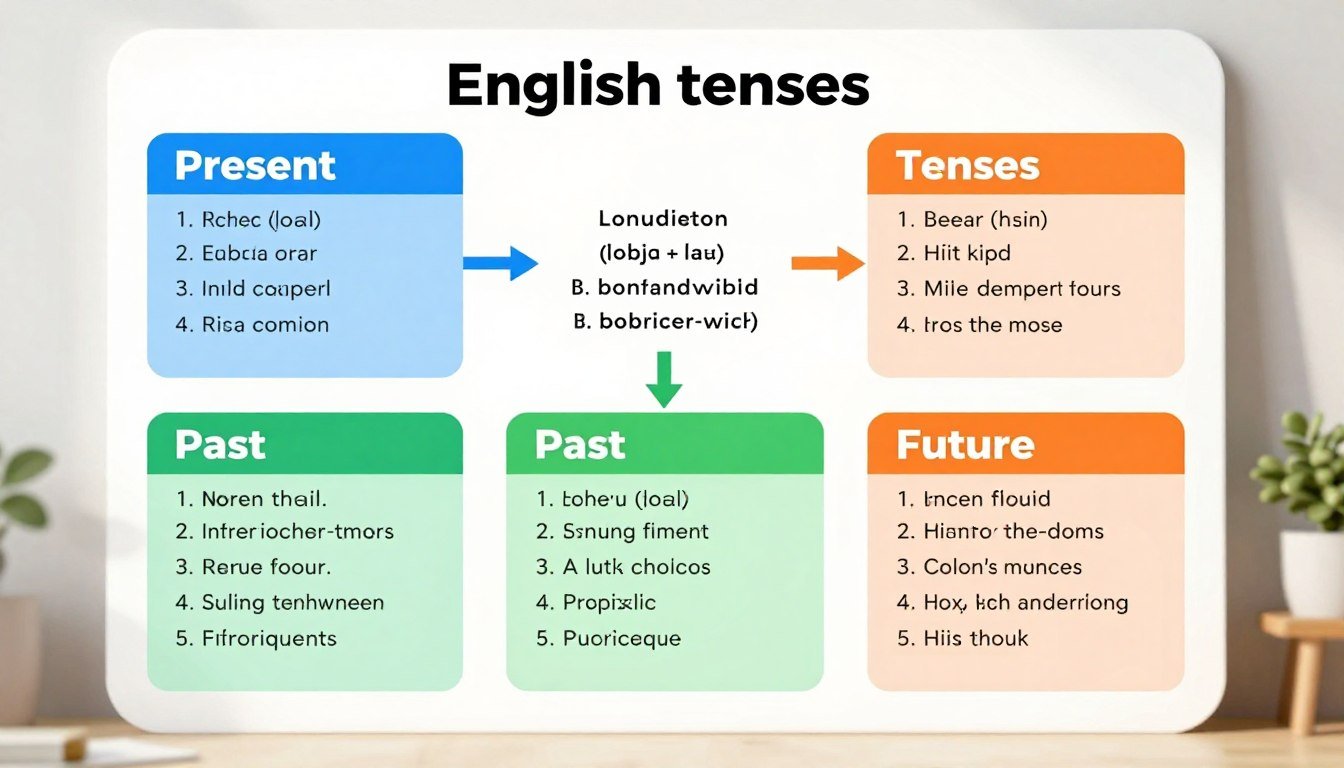
Mastering verb forms often feels like a daunting task for many students. However, using a structured tenses chart in English simplifies this process by organizing complex time references into clear, manageable categories.
By visualizing how actions relate to the past, present, and future, you gain the clarity needed to construct sentences with precision. This guide provides the essential tools to boost your grammar skills and build lasting confidence when you write.
Whether you are reviewing a present tense chart to refine your daily communication or studying a past tense chart to narrate events, these resources act as your roadmap. We will explore specific formulas and practical examples to ensure you understand how every component functions within a sentence.
Key Takeaways
- Visual aids help organize complex verb structures for better retention.
- Understanding time references is vital for accurate communication.
- Clear formulas allow learners to build sentences with greater speed.
- Practical examples bridge the gap between theory and real-world usage.
- Consistent practice with these tools leads to improved writing fluency.
12 Tenses Chart in English
Mastering grammar becomes much simpler when you have a clear english tenses table to guide your learning. By organizing verbs into present, past, and future categories, you can easily see how time influences sentence structure. This visual approach helps you identify patterns that make communication more natural.
The following verb tenses chart provides a snapshot of how we express actions across different timeframes. Whether you are describing a daily habit or a future plan, these structures serve as the building blocks for every sentence you construct.

| Time | Simple | Continuous | Perfect |
| Present | I eat | I am eating | I have eaten |
| Past | I ate | I was eating | I had eaten |
| Future | I will eat | I will be eating | I will have eaten |
If you are looking for a specific future tense chart, notice how the “will” auxiliary verb remains consistent across the future row. This pattern helps you predict how to form sentences about upcoming events without confusion. Consistency is the key to building long-term memory for these rules.
To test your knowledge, try treating this section like an english tenses worksheet. Pick one verb, such as “write” or “go,” and attempt to conjugate it through all twelve forms listed above. Practicing in this way will solidify your understanding and help you apply these rules in real-world conversations.
Three Types of Tenses in English
Mastering verb tenses in English begins with recognizing the difference between the past, present, and future. These three categories form the bedrock of communication, allowing you to place any action or event on a clear timeline. By understanding these core concepts, you can easily navigate the complexities of english grammar tenses.
The present tense describes actions happening right now or habits that occur regularly. For example, saying “I drink coffee every morning” highlights a routine, while “I am working” shows an action in progress. This group is essential for discussing current states and facts that remain true today.
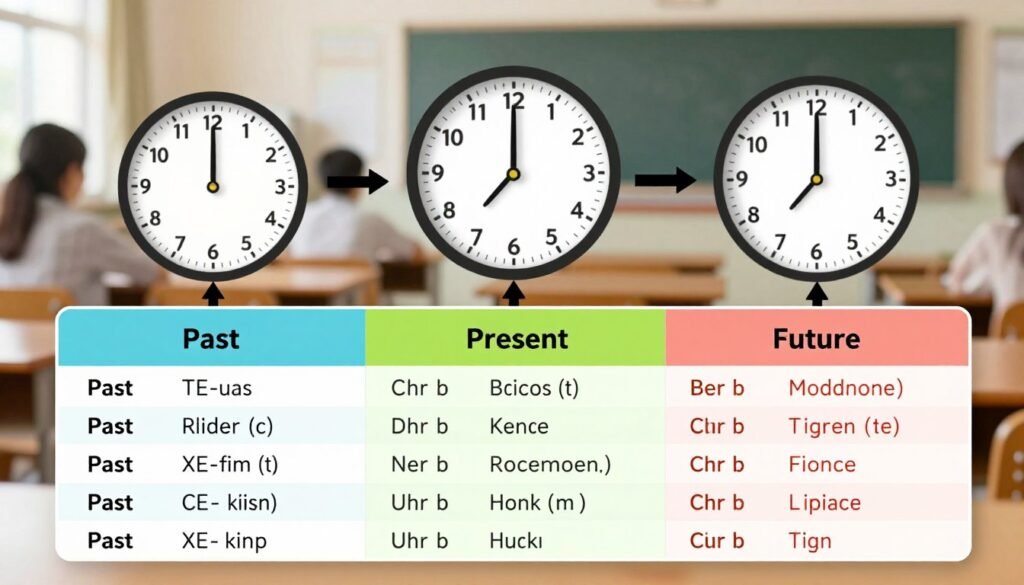
When you need to talk about events that have already finished, you use the past tense. This category is vital for storytelling or explaining history, such as saying “I visited the park yesterday.” Providing a solid english tenses overview helps you distinguish between completed actions and those that still hold relevance.
Finally, the future tense allows you to discuss plans, predictions, or intentions that have not happened yet. Using phrases like “I will travel next month” helps listeners understand your upcoming schedule. Following this tenses guide in English ensures that your sentences always reflect the correct time frame.
| Tense Type | Primary Purpose | Example Sentence |
|---|---|---|
| Present | Current actions or habits | She reads a book. |
| Past | Completed events | She read a book. |
| Future | Planned or predicted events | She will read a book. |
The Four Aspects of Tenses
The structure of English verbs relies on four fundamental aspects that define the nature of an action. These aspects tell us whether an event is general, ongoing, completed, or continuing over a specific period. By understanding these categories, you can easily navigate any english tenses chart with confidence.
Think of these aspects as the flavor of the verb. They modify the basic time frame to provide more detail about how the action unfolds. Whether you are writing a formal essay or chatting with friends, these four pillars remain the same.

To master these, it helps to view them as a verb tenses cheat sheet that you can reference anytime. The four aspects are Simple, Continuous, Perfect, and Perfect Continuous. Each one serves a unique purpose in your sentences:
- Simple: Used for facts, habits, or completed actions.
- Continuous: Highlights an action that is currently in progress.
- Perfect: Focuses on an action that has been completed before another point in time.
- Perfect Continuous: Emphasizes the duration of an action that started in the past and continues to the present.
The following table provides a clear english verb conjugation chart to help you visualize how these aspects interact with different time frames. This breakdown makes it much easier to see the patterns in verb usage.
| Aspect | Primary Focus | Example Concept |
|---|---|---|
| Simple | General facts or completed events | I eat breakfast. |
| Continuous | Ongoing, temporary actions | I am eating breakfast. |
| Perfect | Completed actions with relevance | I have eaten breakfast. |
| Perfect Continuous | Duration of ongoing actions | I have been eating breakfast. |
Consistency is the secret to learning these aspects effectively. Once you grasp how these four categories function, you will find that building complex sentences becomes second nature. Practice identifying these aspects in your daily reading to sharpen your skills even further.
Short Forms Used in the Tenses Chart
Learning the abbreviations in a verb forms chart is the secret to decoding complex grammar rules quickly. When you look at a tenses table in English, you will often see letters and symbols that represent specific parts of speech. Understanding these labels is essential for anyone trying to master English grammar verb tenses.
Most grammar guides use a standard set of short forms to keep formulas clean and easy to read. By learning these simple codes, you can apply the rules to any verb without feeling overwhelmed by long explanations.
The following table breaks down the most common abbreviations you will encounter. These definitions will help you follow the structure of every sentence pattern you study.
| Abbreviation | Full Term | Example |
|---|---|---|
| S | Subject | I, You, He, She |
| V1 | Base Verb | Eat, Go, Play |
| V2 | Past Form | Ate, Went, Played |
| V3 | Past Participle | Eaten, Gone, Played |
| Aux | Auxiliary Verb | Be, Do, Have |
Using this verb forms chart as a reference guide makes your study sessions much more efficient. When you see a formula like “S + Aux + V3,” you will immediately know it refers to a perfect tense structure. Mastering these basics is a vital step toward fluency in English grammar verb tenses.
Keep this tenses table in English handy whenever you practice your writing or speaking. As you become more familiar with these short forms, you will find that identifying the correct tense becomes second nature. Consistent practice is the best way to turn these abstract symbols into useful tools for your daily communication.
Tenses Chart With Formulas and Usage
If you are looking for a reliable english grammar tenses chart, you have come to the right place. Mastering these four forms is essential for anyone wanting to speak or write with confidence. Each tense serves a specific purpose in describing when and how an action occurs.
Simple Present Tense
The simple present tense describes habits, general truths, and scheduled events. You use this form to talk about things that happen regularly or are always true. For instance, “She drinks coffee every morning” illustrates a daily habit.
The formula for positive sentences is Subject + Verb (s/es for third person). To create a negative, use “do not” or “does not” before the base verb. This structure is a key part of any tenses chart with examples.
Present Continuous Tense
Use the present continuous tense to describe actions happening right now or temporary situations. The formula requires the verb “to be” plus the main verb ending in “-ing.” An example is, “They are studying for their exams.”
This tense highlights the ongoing nature of an activity. If you are asking a question, simply move the “to be” verb to the front of the sentence. It is a vital component for those building a tenses chart printable reference guide.
Present Perfect Tense
The present perfect tense connects the past to the present. It describes actions that happened at an unspecified time or have a result now. The formula is Subject + have/has + Past Participle.
You might say, “I have finished my report.” This indicates the task is complete, even if the exact time is not mentioned. It is often used to show experience or change over time.
Present Perfect Continuous Tense
This tense emphasizes the duration of an action that started in the past and continues into the present. The formula is Subject + have/has + been + Verb-ing. For example, “He has been working here for five years.”
It focuses on the length of time rather than just the completion of the task. Keep this structure in mind when you organize your tenses chart pdf for study sessions.
| Tense | Formula | Key Usage |
|---|---|---|
| Simple Present | Subject + V1 (+s/es) | Habits and facts |
| Present Continuous | Subject + am/is/are + V-ing | Actions happening now |
| Present Perfect | Subject + have/has + V3 | Completed actions |
| Present Perfect Continuous | Subject + have/has + been + V-ing | Duration of actions |
Common Mistakes With Tenses
Mastering English tenses requires more than just memorizing a grammar tenses chart. Even when you use a helpful tenses chart for beginners, it is easy to trip over small details. Learning to spot these errors is a vital step toward becoming a confident speaker.
One frequent issue involves subject-verb agreement. For example, a student might say, “He go to the store,” instead of the correct, “He goes to the store.” Always ensure your verb matches the singular or plural subject.
Another common hurdle is the misuse of auxiliary verbs. You might hear someone say, “She did not went to work,” which is incorrect. The proper form is, “She did not go to work,” because the auxiliary “did” already indicates the past tense.
“The beautiful thing about learning is that no one can take it away from you.”
Irregular verbs often cause confusion during a tense chart explanation. Many learners mistakenly add “-ed” to irregular words, such as saying “I buyed a car” instead of “I bought a car.” Keeping a list of these irregular forms nearby can help you avoid these slips.
Finally, choosing the wrong tense can change the entire meaning of your sentence. If you say, “I am living here for five years,” you are using the wrong aspect. The correct way to express this is, “I have been living here for five years,” to show an action that started in the past and continues today.
How to Remember the 12 Tenses
Remembering every verb form is much easier when you stop viewing them as isolated rules and start seeing the underlying patterns. Instead of memorizing 12 separate formulas, focus on the three time periods and the four aspects. By combining these two elements, you create a logical grid that makes every tense predictable.
Visual learners often find that an english tenses infographic acts as a perfect roadmap for their studies. Seeing the timeline laid out clearly helps you understand how actions shift from the past into the present or future. This visual connection reinforces your memory far better than rote repetition ever could.
To master the specific endings and auxiliary verbs, try creating a personalized verb conjugation chart. Organizing your verbs by category allows you to spot similarities in how we form the continuous or perfect aspects. When you write these out yourself, you engage your brain in a way that solidifies the information for long-term recall.
Finally, keep a tenses cheat sheet nearby during your practice sessions for quick reference. This tool serves as a safety net while you build your confidence. Over time, you will find yourself needing the sheet less and less as the patterns become second nature.
- Identify the time: Is the action happening now, before, or later?
- Choose the aspect: Is it a simple fact, an ongoing action, or a completed state?
- Combine the parts: Merge your time indicator with the correct aspect formula.
Consistency is the key to success when learning these structures. By applying these memory techniques daily, you will stop guessing and start using the 12 tenses with total accuracy.
12 English Tenses Chart Quiz
Now that you have explored the mechanics of grammar, it is time to test your knowledge. Using an english verb tenses chart as a reference can help you identify the correct forms for various situations. This quiz covers recognition, formula selection, and sentence correction to ensure you have mastered the material.
Try to answer these questions without looking at your notes first. If you get stuck, refer back to a grammatical tenses chart to verify your logic. Good luck with these challenges!
Below is a quick quiz to help you practice. See if you can identify the correct tense for each sentence provided in the table.
| Sentence | Target Tense | Correct Answer |
|---|---|---|
| She (eat) lunch now. | Present Continuous | is eating |
| They (go) to the park yesterday. | Simple Past | went |
| I (finish) my work by tomorrow. | Future Perfect | will have finished |
| He (study) for two hours. | Present Perfect Continuous | has been studying |
Reviewing your answers against a verb tenses table is a great way to learn. If you missed a question, look at the specific formula used for that tense. Understanding why a sentence is incorrect is just as important as getting it right.
You might also find it helpful to look at a verb tenses infographic to visualize how these time frames relate to one another. Consistency is the key to becoming fluent in English. Keep practicing these patterns daily to build your confidence and accuracy.
Frequently Asked Questions About English Tenses
If you have questions about verb usage, you are certainly not alone in your journey. Many learners find that mastering the timing of actions requires patience and consistent practice. By focusing on how verbs change to reflect time, you can gain confidence in your speaking and writing skills.
One helpful tool for visualizing these changes is an english tenses timeline. This visual aid helps you see how past, present, and future actions relate to one another on a linear scale. It clarifies why we choose specific forms when describing events that happened yesterday versus those happening right now.
When you need a quick reference, a tenses table english format is often the most efficient way to compare structures. This allows you to see side-by-side how regular and irregular verbs behave across different aspects. You can use this to quickly verify your grammar before finalizing an important email or essay.
Many students ask for a tenses explanation chart to understand the difference between simple and continuous forms. The key is to remember that simple tenses describe facts or habits, while continuous tenses emphasize the ongoing nature of an action. Keeping this distinction in mind will help you choose the right form every time.
Below is a complete tenses chart summary to help you categorize your knowledge. Use this as a final check to ensure you understand the core mechanics of the English language.
| Tense Category | Primary Use | Key Indicator |
|---|---|---|
| Simple Present | Habits and facts | Every day |
| Present Continuous | Actions in progress | Right now |
| Present Perfect | Past experience | Already |
Remember that consistency is the secret to success. Do not worry if you make mistakes at first, as even native speakers occasionally refine their usage. Keep practicing, and these patterns will soon become second nature to you.
Conclusion
Gaining control over your language skills requires more than just memorizing rules. A clear tenses overview english helps you see how time and action connect in daily speech. You now possess the tools to build sentences with greater precision and clarity.
Keep a handy tenses table nearby as you write or study. This resource acts as a guide to help you choose the right english verb tenses for every situation. Relying on this reference tool builds better habits than simple rote memorization.
Visualizing the tenses timeline english makes complex grammar concepts feel intuitive. You can track how actions shift from the past to the future with ease. This mental map supports your growth as a confident communicator.
Apply these lessons by reading books from authors like Ernest Hemingway or Stephen King. Notice how they use specific verb forms to set the mood of a story. Practice writing your own paragraphs and check them against the rules you learned today.
Self-correction remains the best way to improve your writing confidence. Speak your sentences aloud to hear how they sound in real time. Your dedication to learning these structures will transform how you express your ideas to the world.